
Sound, Safety, and Connection: Retuning the Nervous System via Polyvagal Theory
Healing from trauma is not a matter of willpower; it is a matter of biology. To truly move past traumatic experiences, we must address the autonomic nervous system. At Mosaic, our trauma-informed care is rooted in Polyvagal Theory, developed by world-renowned researcher and Unyte Health’s Chief Scientific Advisor, Dr. Stephen Porges.
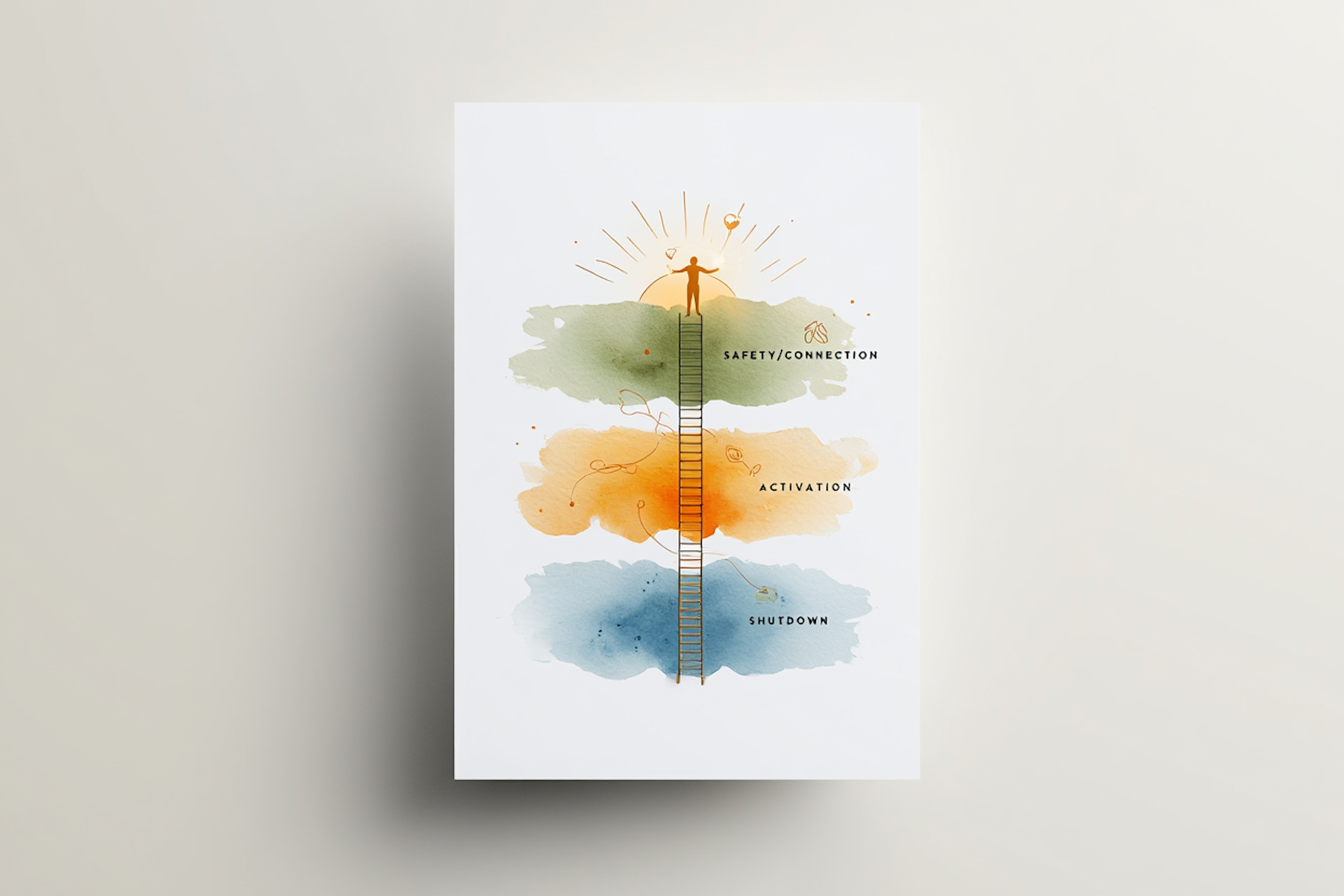
The Autonomic Ladder Polyvagal Theory describes how our vagus nerve—the “mind-body connection”—monitors the world for cues of safety or danger. This process, known as neuroception, shifts us between three hierarchical states on the “Autonomic Ladder”:
- Ventral Vagal (Parasympathetic): The state of safety, connection, and creativity.
- Sympathetic: The “fight or flee” state driven by perceived threat.
- Dorsal Vagal: The “freeze” or “shutdown” state when a threat feels life-threatening.
The Safe and Sound Protocol (SSP)
To help patients move from a state of reactivity to resilience, Mosaic utilizes the Safe and Sound Protocol (SSP). The SSP is a non-invasive acoustic vagal nerve stimulator that uses specially filtered music to train the auditory system to tune into the frequencies of the human voice. By using the ear as a “portal to the brain,” the SSP stimulates the social engagement system and helps “retune” the nervous system for safety.
Evidence-Based Outcomes
The efficacy of these neurobiology-backed interventions is supported by real-world evidence. Clinical assessments (using validated tools) demonstrate that:
- 63% of trauma patients moved from clinical to non-clinical symptom levels as measured by the PCL-5.
- 61% of anxiety patients achieved non-clinical status as measured by the GAD-7.
- 54% of depression patients moved to non-clinical levels as measured by the PHQ-9.
Harnessing Neuroplasticity
The brain is plastic, meaning it can change in response to stimulation. By establishing new neural pathways through vagus nerve stimulation, the Safe and Sound Protocol allows the nervous system to adapt more quickly to life’s challenges. Our goal is to replace emotionally charged reactivity with controlled responsiveness, helping you feel with your body, not just in it.
Find Your Way Back to Safety
If you are ready to move beyond survival mode and toward a life of social connection, visit our Trauma-Informed Care service page. Explore our Unyte resources to learn more about how we use the science of sound to promote lasting, measurable healing.