
Trauma & PTSD Therapy | Healing and Posttraumatic Growth
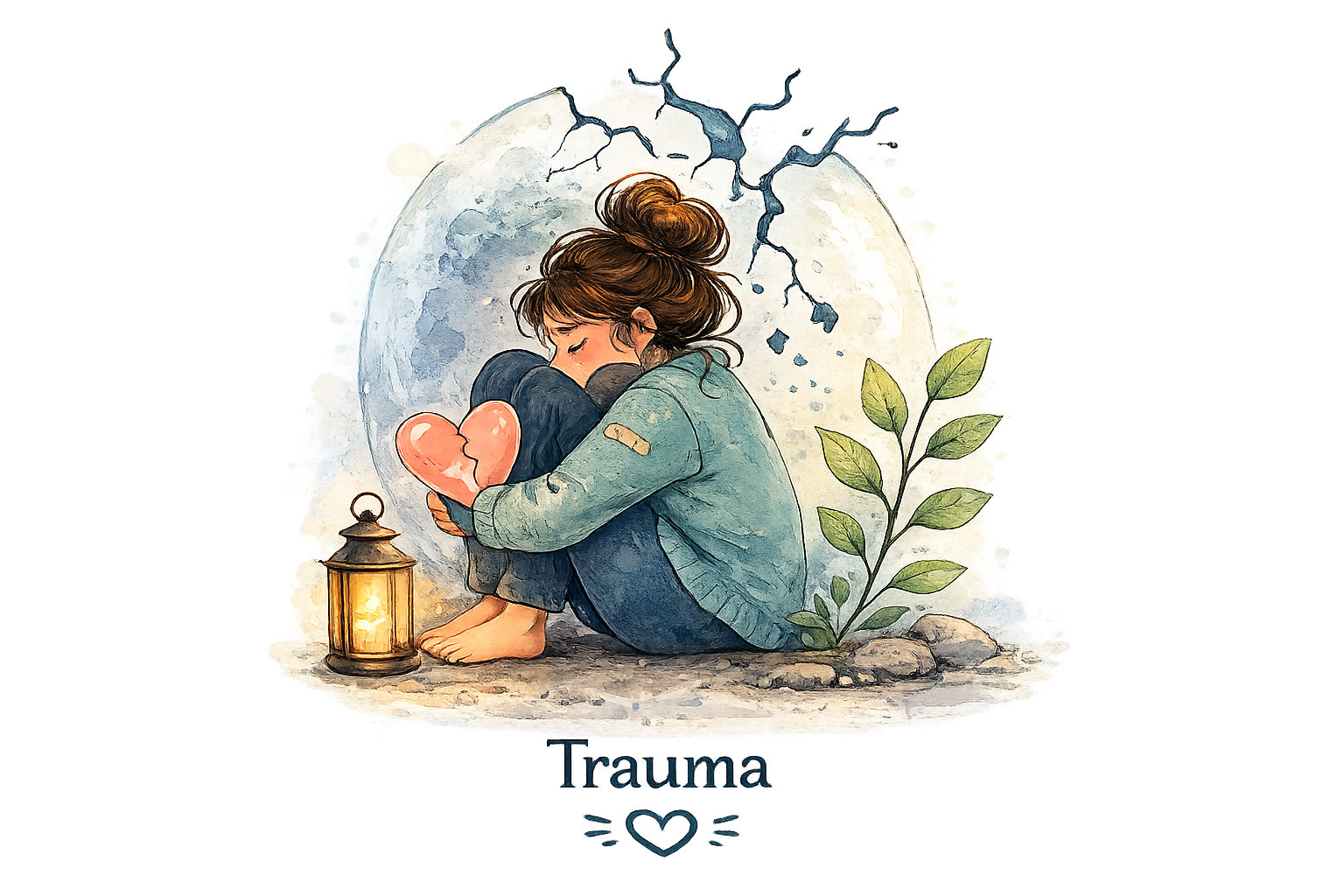
Trauma changes how we experience the world. Healing can change what comes next.
You may be functioning on the outside while feeling exhausted, guarded, disconnected, or overwhelmed on the inside. Trauma-informed therapy offers space to make sense of those reactions, build safety, and reconnect with your own choices—at your pace.
What is trauma?
Trauma is not simply an event; it can also describe the lasting impact of experiences that overwhelm our capacity to cope or shake our sense of safety, trust, and control. Some people experience a single frightening incident. Others carry the effects of repeated stress, loss, abuse, neglect, medical experiences, or painful relationships. Responses differ from person to person.
You do not have to compare your experience with someone else’s—or have a formal PTSD diagnosis—to deserve support.
How trauma may show up
Body & nervous system
Feeling constantly on alert, sleep problems, tension, fatigue, or strong reactions to reminders.
Thoughts & emotions
Intrusive memories, guilt, shame, anxiety, emotional numbness, or difficulty concentrating.
Relationships
Difficulty trusting, withdrawing, people-pleasing, conflict, or feeling disconnected from loved ones.
Everyday life
Avoiding certain situations, feeling overwhelmed by ordinary demands, or struggling to feel fully present.
These reactions can have many causes. A thoughtful assessment helps clarify what is happening rather than assuming every symptom is PTSD.
Could your symptoms be related to PTSD?
Our 20-question PTSD Symptom Check-In uses the PCL-5 to reflect on experiences over the past month. It provides an overall screening score and a printable summary to discuss with a qualified professional.
It is not a diagnosis. You do not need to describe your trauma, and the form does not ask for your name or email.
What trauma-informed therapy can look like
Therapy begins with a collaborative understanding of your needs and goals. Depending on what feels useful, sessions may focus on emotional regulation, recognizing triggers, strengthening boundaries, rebuilding trust, reducing avoidance, understanding how trauma influences beliefs, and navigating grief or life changes.
For people with PTSD, structured trauma-focused treatments such as cognitive processing therapy, prolonged exposure, and EMDR have strong research support. A clinician can help determine which treatment is appropriate and whether a specialized referral would be helpful. The specific techniques used depend on your clinician’s training and your treatment plan.
What is posttraumatic growth?
Posttraumatic growth (PTG) refers to positive psychological changes that some people notice as they struggle with the aftermath of trauma. As described by Boulder Crest Foundation, hardship can disrupt long-held assumptions and lead people to reconsider priorities, relationships, and meaning.
Researchers commonly describe five possible areas of change:
Deeper relationships
Finding new ways to connect, ask for support, or appreciate mutual care.
New possibilities
Discovering interests, directions, or choices that feel newly important.
Personal strength
Recognizing ways you have endured and adapted, without minimizing the difficulty.
Appreciation of life
Noticing moments, values, or experiences with a changed perspective.
Spiritual or existential change
Reconsidering meaning, beliefs, identity, or what matters most.
Growth is possible, not mandatory. Someone can experience distress and growth at the same time, and no one needs to find a silver lining to heal. Trauma itself is not a gift, and the absence of perceived growth is not a failure.
Gentle reflection: where do I begin?
Use these prompts only if they feel grounding rather than overwhelming:
Notice
What helps me feel even a little safer or more present today?
Connect
Who or what reminds me that I do not have to carry everything alone?
Choose
What is one small boundary, need, or value I want to honor this week?
Be kind
How might I respond to myself as I would to someone I care about?
Common questions
Do I need a PTSD diagnosis to start therapy?
No. Therapy can help with the effects of distressing experiences whether or not you meet criteria for PTSD.
Can PTSD and posttraumatic growth happen together?
Yes. A person can experience ongoing trauma symptoms while also noticing changes in values, connection, or personal meaning.
Will I have to talk about everything that happened?
You and your clinician can discuss the approach, pace, and purpose of sharing details. Trauma-focused approaches differ, and treatment should involve informed, collaborative decisions.
What if I feel worse when thinking about trauma?
It is okay to pause. Try returning attention to the present and seek guidance from your clinician. If you feel in immediate danger, contact emergency services; in the United States, call or text 988 for crisis support.
Support that meets you where you are
At Mosaic Clinic, we approach trauma therapy with curiosity, collaboration, and respect for your lived experience. Whether your goal is to reduce distress, feel safer in relationships, or reclaim a sense of direction, you do not have to figure it all out at once.
Free resource: Healing the Nervous System Coloring Book
Understanding your stress response can feel less intimidating when there’s space to slow down, reflect, and even pick up a colored pencil. Explore Mosaic Clinic’s approachable, 74-page printable guide—featuring a colorful cover and black-and-white illustrations you can color.
The book includes nervous-system basics, trauma responses, polyvagal theory, the window of tolerance, grounding activities, self-compassion exercises, and reflection worksheets.
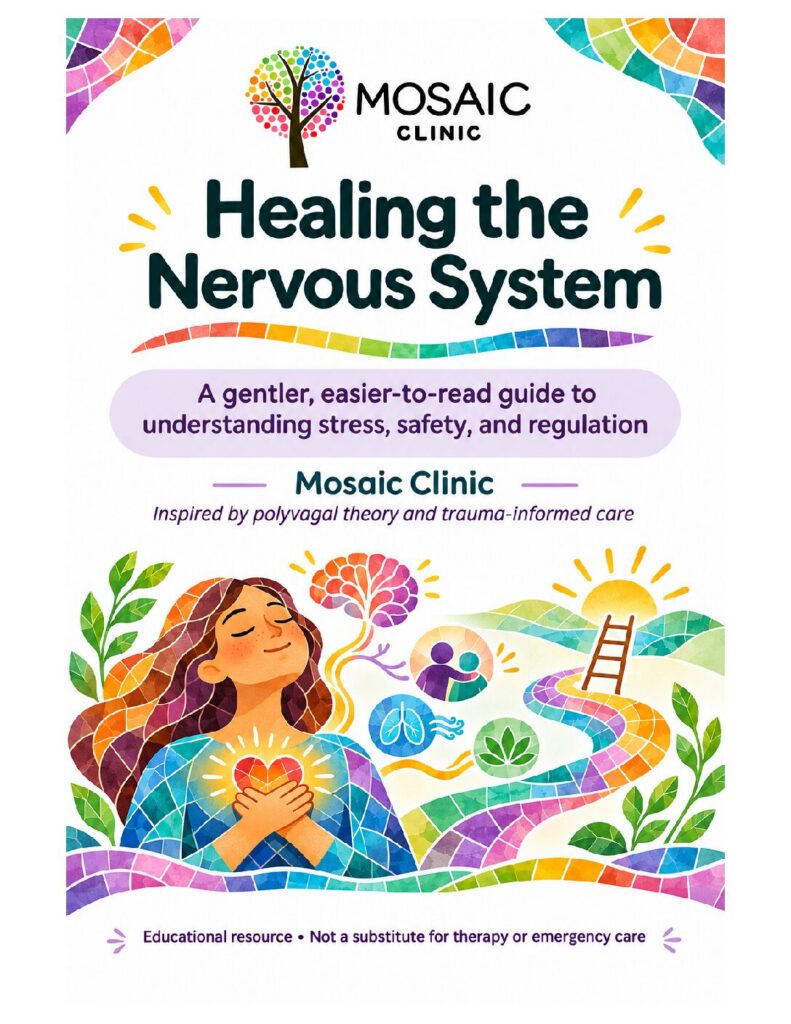
Free 74-page printable book
A colorful cover and black-and-white coloring pages with approachable explanations and exercises for understanding stress, nervous system responses, grounding, and emotional regulation.
Enter your email to get your copy:
Your email is used to deliver this resource. Marketing updates are optional; you can download without subscribing. Please do not enter personal health information.
Educational support only; this book is not a substitute for personalized therapy, medical advice, or emergency care.